
Inside the Experience Economy: Key Takeaways from SWAMP’s Secret Sauce Breakfast Session
Get our Playbook
Discover the best way to work with us
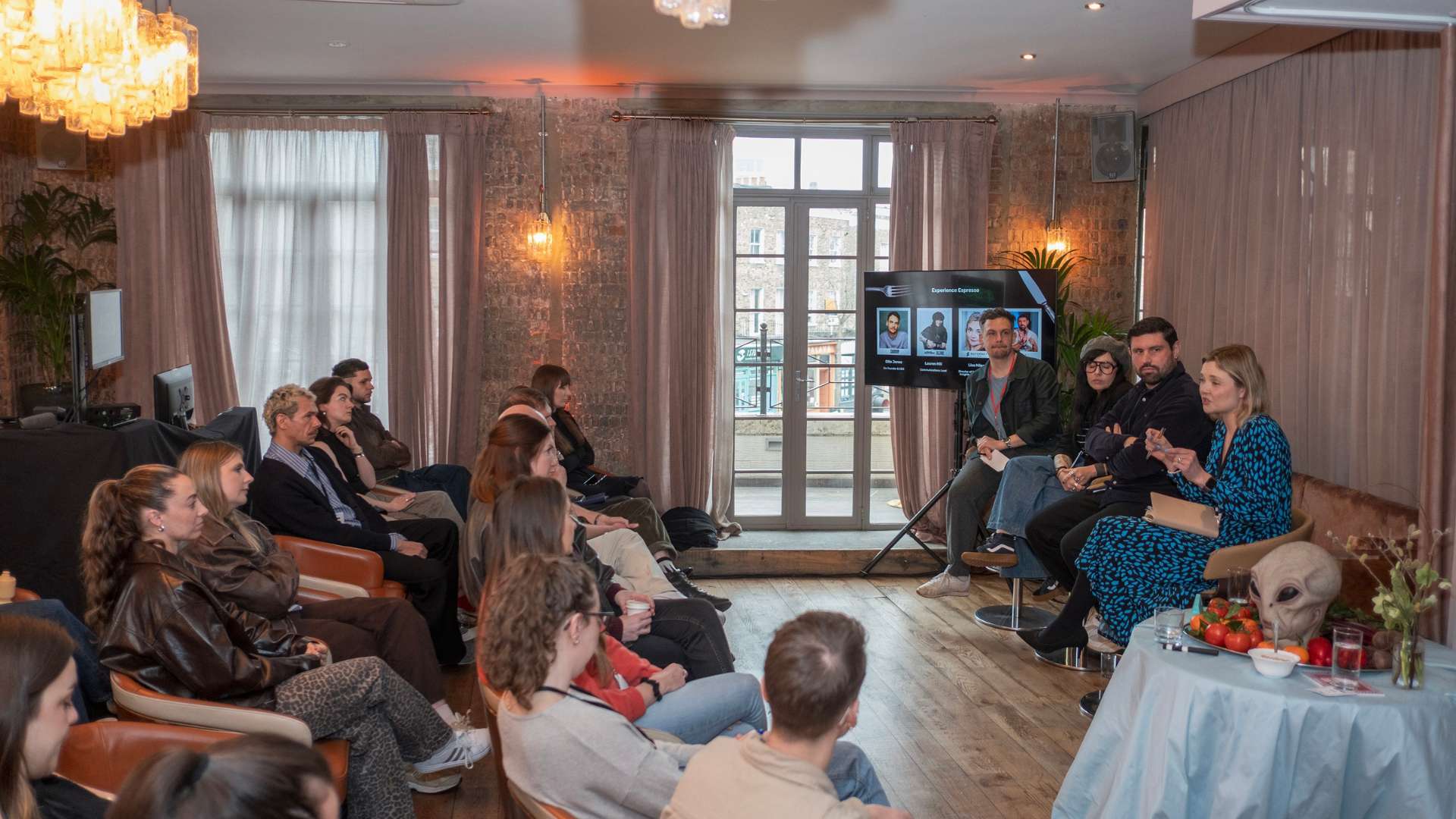
Last week, experiential marketing agency SWAMP hosted its first ever Secret Sauce Event. The Breakfast Sessions at The Cross in King’s Cross brought together industry leaders to discuss the future of the experience economy and the evolving role of experiential marketing.
With insights from speakers across London & Partners, ITV, Activation Blizzard and Outernet, the session explored how brands can move beyond imitation to create truly memorable experiences that resonate with audiences.
The Rise of the Experience Economy
Opening the session, Simon McCaugherty from London & Partners explored the growing importance of the experience economy, particularly within London.
While experiential activity has historically operated somewhat under the radar, its impact is now undeniable. Experiences are not only a key driver in attracting visitors to London but also play a major role in encouraging them to stay longer and engage more deeply with the city.
More broadly, consumer behaviour is shifting. Across society, people are now spending more on experiences than on material possessions. In fact, 57% of spending now goes towards experiences compared to 43% on products, contributing to an experience economy in the UK valued at £130 billion.
For brands, this signals a clear shift in strategy: the focus is moving away from pure reach towards building meaningful and memorable connections with audiences.
Designing Experiences That People Want to Be Part Of.
A key theme throughout the discussion was the importance of designing experiences with audience participation at their core.
Successful experiential campaigns increasingly focus on creating communities and cultural moments, rather than simply delivering one-off brand activations. Audiences are seeking experiences that feel immersive and meaningful, particularly those that incorporate:
· Interactive participation
· Gaming and digital culture
· Wellness and wellbeing
· Sustainability
· Food and drink
Brands are also thinking beyond purely commercial outcomes. There is a growing emphasis on authentic brand alignment with audiences and culture, ensuring that experiences feel genuine rather than purely promotional.
Location also plays an important role. High footfall, strong dwell time and the ability to become a cultural destination in its own right are key factors when brands plan experiential activity. Increasingly, underused spaces are being reimagined and activated through experiential campaigns, with the most successful projects forming part of wider multi-channel strategies rather than standalone activations.
SWAMP’s Creative Approach: Putting the Audience at the Centre
Sadie Spencer, Creative Director at SWAMP, shared how the agency’s theatrical roots help shape its approach to experiential design.
Drawing on storytelling and stagecraft, SWAMP focuses on placing the consumer at the centre of the experience, creating moments that feel immersive, surprising and emotionally engaging.
Through a series of case studies, Sadie highlighted the importance of testing and learning within experiential campaigns. Unlike other forms of marketing, experiential cannot simply be replicated from one activation to the next. Each campaign presents new variables, audiences and contexts, meaning there is no “rinse and repeat” formula for success.
The Power of IRL and Digital Integration
The session also explored how combining physical experiences with digital amplification can dramatically increase impact.
Lisa Miles, Director of Strategic Growth, Insights and Engagement at Outernet London, discussed how in-real-life (IRL) experiences and digital out-of-home (DOOH) media can work together to create memorable brand moments.
One example highlighted was a Samsung pop-up retail activation at Outernet London last summer. The campaign demonstrated the power of experiential engagement, with:
· 79% of non-Samsung users considering a new Samsung smartphone after the event.
· 65% of visitors sharing their experience online.
The results reinforced how physical experiences, when combined with digital storytelling and amplification, can significantly extend reach and engagement.
Looking Ahead
As the experience economy continues to grow, brands are recognising the importance of creating moments that audiences want to actively participate in and share.
The key takeaway from the session was clear: experiential marketing is no longer a niche or supporting tactic. Instead, it is becoming a central pillar of modern brand strategy, capable of driving deeper emotional connections, cultural relevance and measurable impact.
For brands willing to take creative risks and put audiences at the centre, the opportunities within the experience economy have never been greater.
If you’d like to explore how Outernet London can help deliver experiential marketing for your brand, please visit Experiential & Events - Outernet B2B or email [email protected] for more information.