
Why Play Matters: Reconnecting Audiences Through Experiential Marketing

Get our Playbook
Discover the best way to work with us

In an increasingly digital and always-on world, brands face a growing challenge: how do you create meaningful human connection when attention is fragmented, and interactions are increasingly mediated by screens?
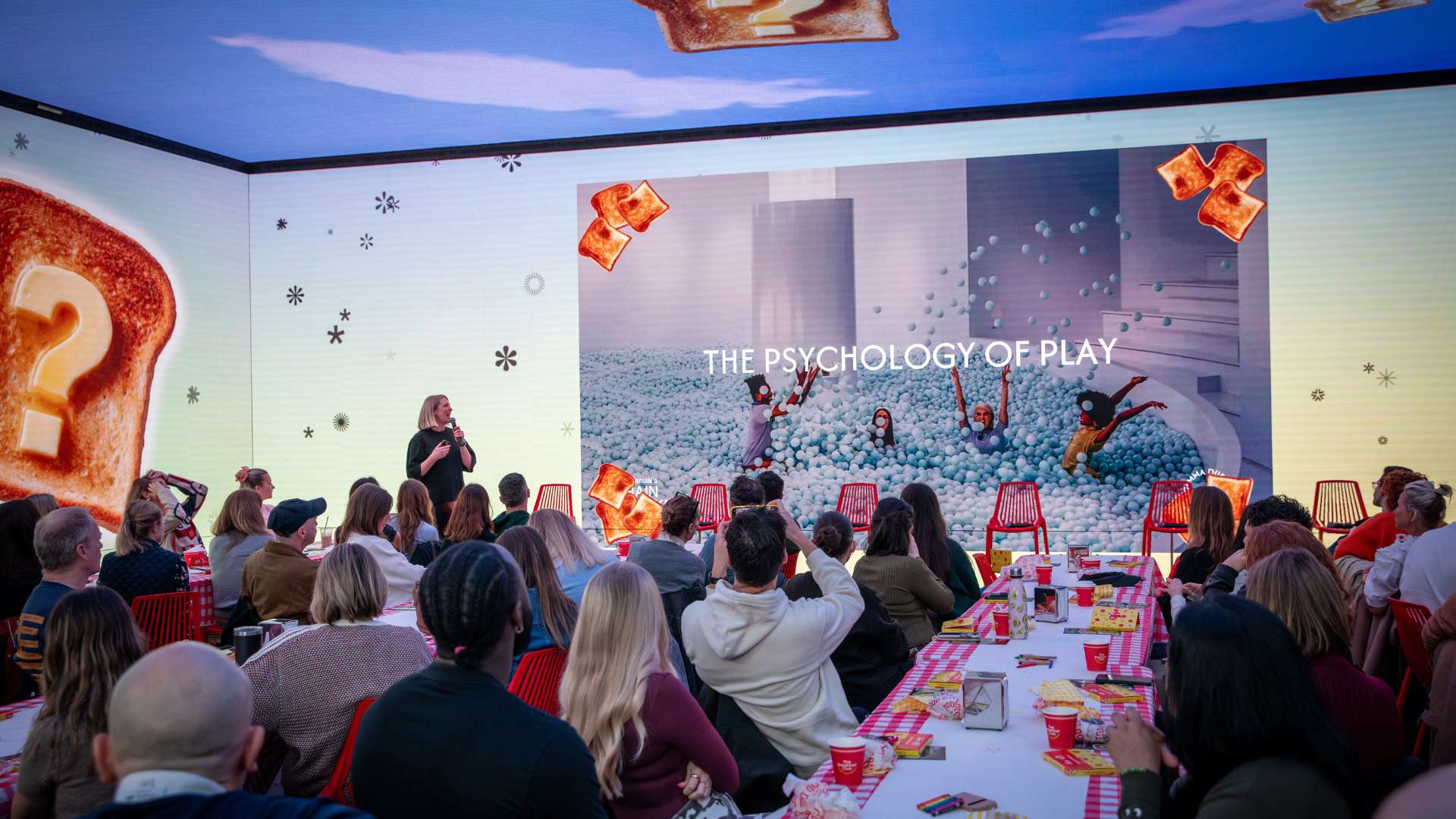
At the recent Manual’s Brain Breakfast – Session 2: Play to Connect, hosted at Outernet London, industry leaders explored exactly this question. The conversation centred on a powerful insight: play is one of the most effective tools brands have to create real connection through experiential marketing.
The power of physical experience in a digital world
Brand strategist James Kirkham opened the session by emphasising the importance of physical experiences in today’s digitally cluttered landscape. While digital channels offer scale, physical experiences offer depth. They allow brands to cut through noise and create moments that audiences truly remember.
Layer play into those experiences, and their impact multiplies.
Play encourages curiosity, invites participation and creates a natural sense of joy, all of which strengthen how people engage with brands in real life.
The psychology of play
Keynote speaker Gemma Duffy explored the psychology behind why play is so powerful.
As humans, play is fundamental to how we learn, connect and explore the world. From early childhood onwards, play activates our brains in ways that stimulate creativity, curiosity and emotional engagement.
Yet in modern society, many of us have forgotten how to play.
We live in what Duffy described as a “highly processed connection society.” While technology has given us unprecedented access to each other, many of those interactions lack the depth and nourishment our brains and bodies need.
Play helps restore that balance.
It stimulates learning, strengthens human connection and supports wellbeing. Play broadens our thinking, builds resilience and enhances positivity, all powerful outcomes for both individuals and brands trying to create meaningful engagement.
Duffy referenced her own experience at The Colour Factory, describing how immersive environments can unlock something unexpectedly powerful for visitors. When audiences actively participate rather than passively observe, the emotional impact is far greater.
Gemma also referenced the same principle being active in the immersive Butterfly Trail experience at Outernet, where audiences are transported into a playful journey that sparks curiosity, wonder and shared interaction.
Play in action: insights from the panel
A panel discussion hosted by Kirkham brought together leaders from across the experiential industry, including:
Ben Richards, Head of Experience, OLA at Lego Group
Lauren Alderton, Associate Director at Fever
Mickelle Roberts – Brand Experience Director, Global Media and Entertainment
Rowena Maddock – Director of Experiences and Events at Outernet Global
Adam Parker – Creative Director, The Manual
Together they explored how play translates into real-world brand experiences.
For Ben Richards, play is embedded in the DNA of LEGO. One important reminder: people play differently. Individuality shouldn’t be seen as a challenge but it’s part of what makes play powerful. As long as participants are enjoying themselves, the experience is working.
Lauren Alderton highlighted the importance of audience participation. When people can influence the outcome of an experience, they become active contributors rather than passive viewers.
Mickelle Roberts shared the challenge of creating connection at scale during major events. The key is balancing content with meaningful interaction, ensuring audiences feel part of something collective.
Rowena Maddock emphasised the importance of shared participation. When experiences move from passive to active engagement, audiences feel a sense of ownership. That ownership often leads to greater social sharing and organic amplification.
Adam Parker reinforced another crucial point: presence. Experiential marketing works best when audiences are fully immersed in the moment. That’s when emotional reception is at its highest.
Designing experiences beyond the peak moment
Another key insight from the discussion was about experience design.
Experiential activations often focus on the “big moment” or the peak spectacle. But Ben Richards suggested brands should also pay attention to the unexpected moments between the peaks.
These quieter, surprising interactions can often become the most memorable parts of an experience.
They create delight. They spark conversation. And they stay with audiences long after the event ends.
Creating long-lasting cultural moments
The panel also explored how experiential activations can extend beyond one-off events.
Rowena Maddock pointed to the power of tapping into cultural fandoms, referencing campaigns like the Spotify collaboration around Oasis. By aligning with culturally significant moments, brands can create experiences that resonate far beyond the initial activation.
Lauren Alderton shared another compelling statistic: among Fever’s top 10 global experiences, every single one includes an element of play.
Perhaps most importantly, Rowena Maddock challenged the idea that play should only be used by “playful” brands. In reality, play can work across every category, from technology to finance to retail when it is thoughtfully designed.
The future of play: technology and AI
The discussion also turned to the role of emerging technologies.
Rather than replacing experiential creativity, the panellists agreed technologies such as Artificial Intelligence can act as enhancers.
Ben Richards described AI as a tool that can maximise existing ideas and extend play into new dimensions. Mickelle Roberts echoed this, explaining how organisations like Global are exploring ways AI can amplify audience engagement and extend consumer moments.
Lauren Alderton also highlighted the rise of “kidulting” with adults increasingly seeking playful, nostalgic experiences as a growing cultural trend.
Why play matters more than ever
The session closed with a clear takeaway: play is not a luxury but it’s a powerful strategic tool.
In a hyper-connected yet often emotionally disconnected world, play helps rebuild something many digital interactions struggle to replicate which is genuine human connection.
Experiential marketing provides the space for that connection to happen and when play is woven into the experience, it becomes even more powerful.
At Outernet London, brands are uniquely positioned to create these kinds of immersive, playful experiences at scale.
If you’d like to explore how your brand can harness the power of play through experiential campaigns, visit the Experiential & Events section of the Outernet B2B site or contact [email protected]